

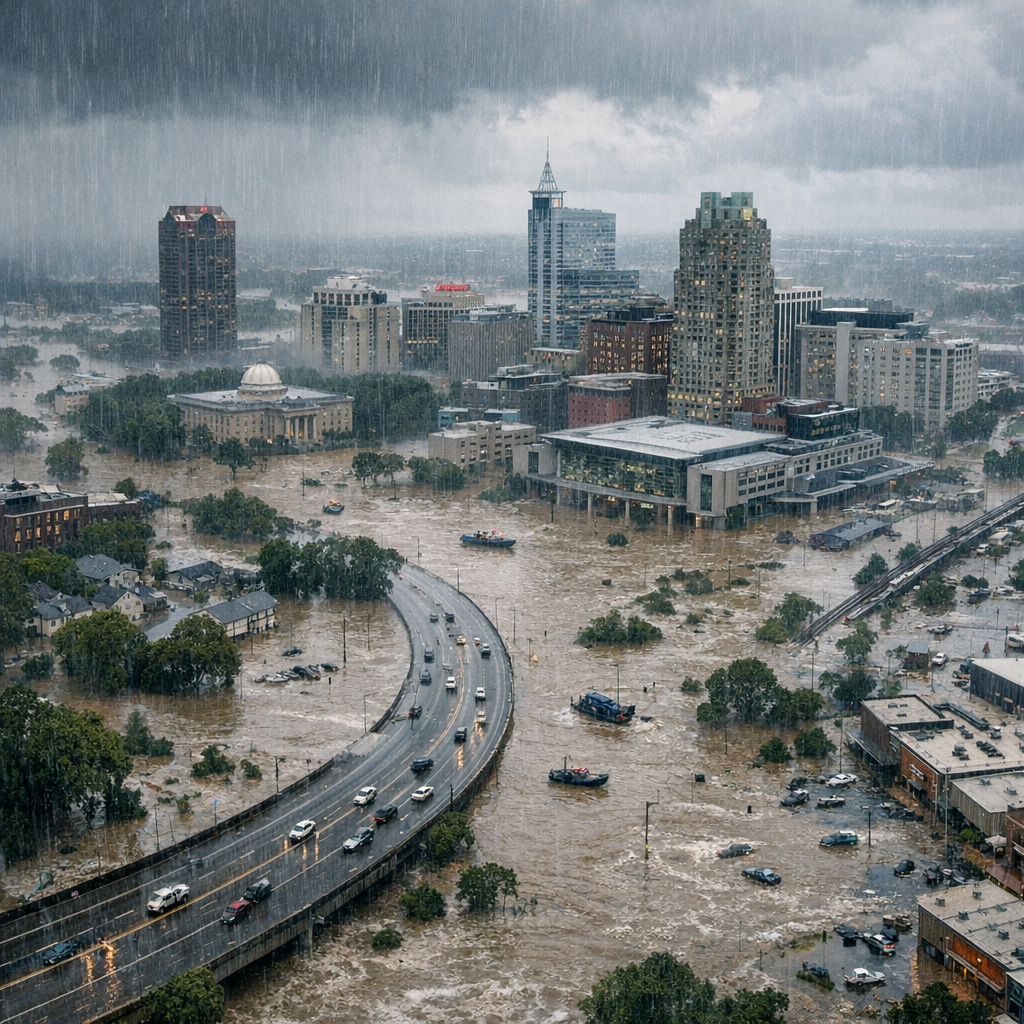
Climate change is a global phenomenon with local repercussions, and Raleigh is no exception. Recent studies indicate that the Triangle region has experienced a significant increase in rainfall intensity over the past five decades. This trend is attributed to human-driven climate change, leading to warmer air capable of holding more moisture, thereby intensifying precipitation.
These increasingly intense rainstorms can trigger hazardous conditions such as flash flooding, landslides, and dangerous driving, posing serious risks to public safety. The study calculated intensity by dividing total annual rainfall by the total hours of rainfall using NOAA data. Recent extreme weather events in North Carolina further emphasize this growing trend.
In response to these challenges, local authorities and communities are implementing measures to mitigate the effects of climate change. For instance, Raleigh has introduced water restrictions during periods of drought to conserve resources. Additionally, initiatives like the Transatlantic Climate Bridge project aim to foster international cooperation on climate and energy policy issues, focusing on green infrastructure and nature-based solutions.
Understanding the link between global climate trends and local weather patterns is crucial for developing effective strategies to protect Raleigh’s environment and residents. Continued research and proactive measures are essential to address the ongoing challenges posed by climate change.